Report #1 · Dragon Warrior III · every release
The Dragon Warrior III Rebalance Ledger
One quest, eight releases, 37 years. We read the monster tables straight out of the Famicom, NES, Super Famicom and Game Boy Color cartridges and lined them up with the later versions to see exactly what each remake changed — and what it quietly copied.
1Did the English version change anything?
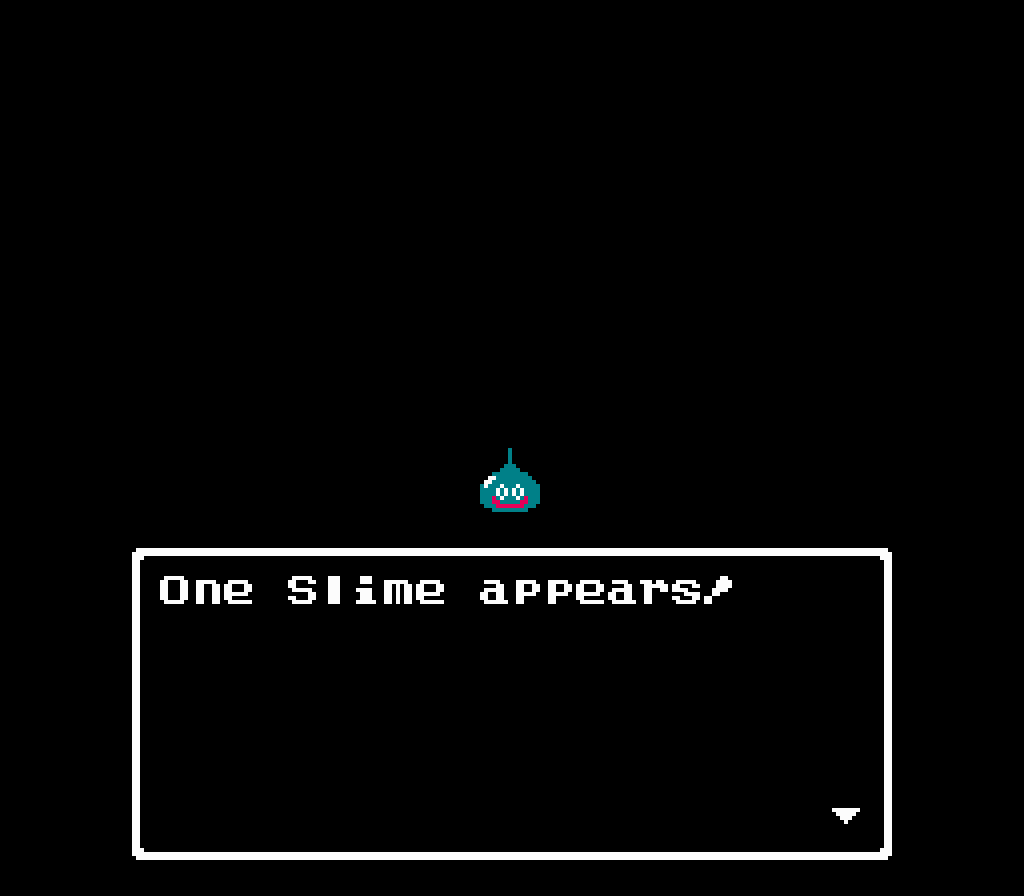
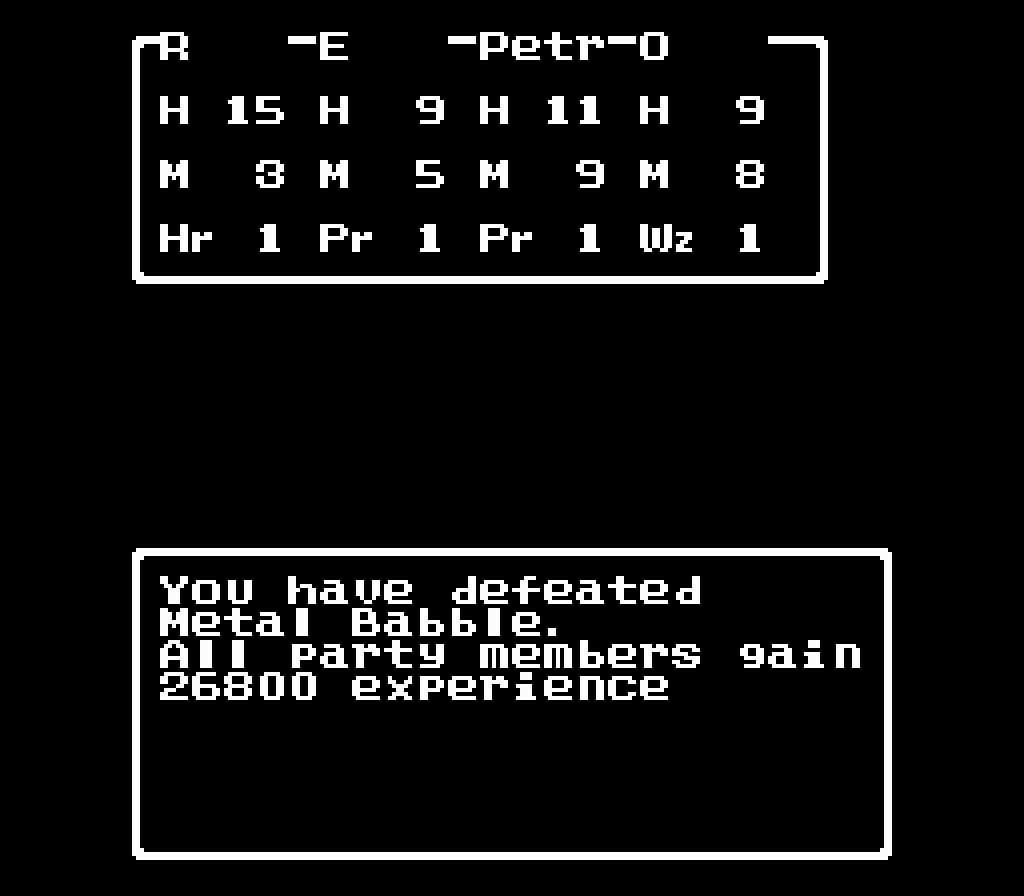
Dragon Quest III shipped in Japan in 1988; Dragon Warrior III reached North America in 1992 with a new script, new names and a battery save. We read the monster table straight out of both cartridges — and both Japanese revisions. All 139 monsters, 3,197 bytes: 0 differences. The translation changed what monsters are called — the NES's Metal Babble became "Metabble" on the Game Boy Color and is "Liquid metal slime" today — not a single number about them.
Only two releases rewrote the monsters: the 1996 remake and HD-2D
Share of monsters with at least one changed stat, between consecutive releases (cartridge-read unless noted)
- Changed
2What did the 1996 remake change for everyday monsters?
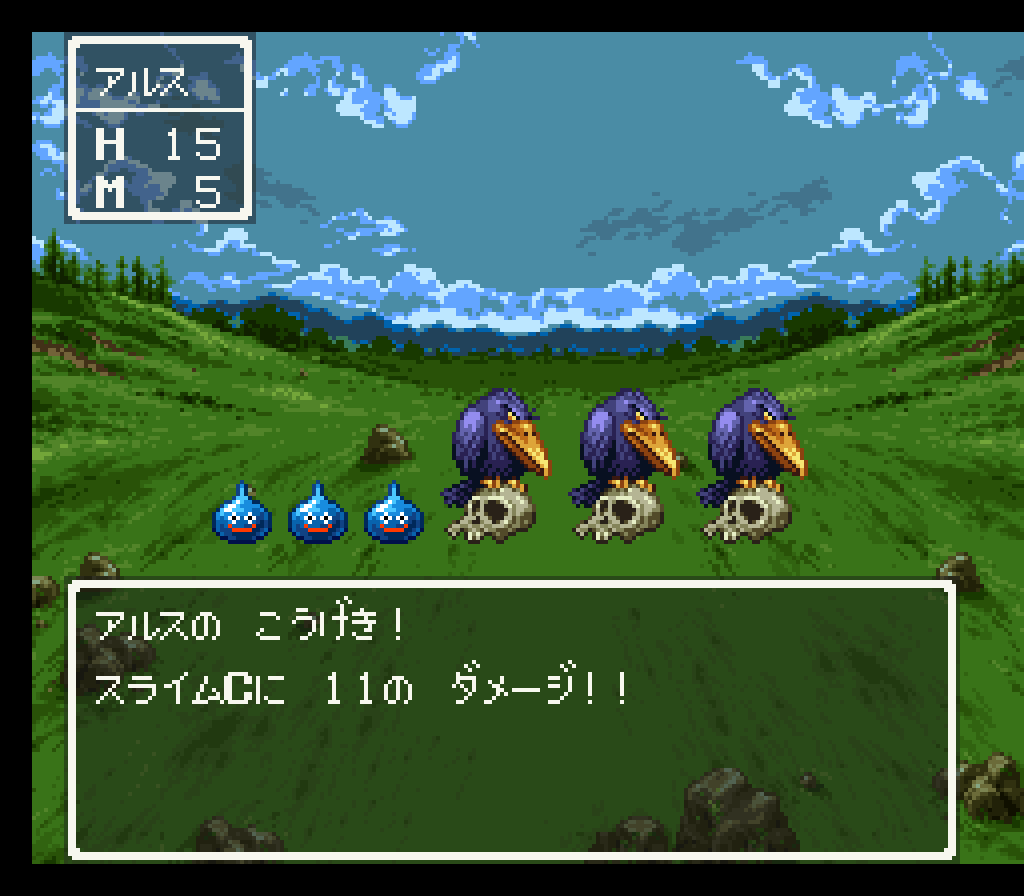
The Super Famicom remake redrew everything, added a dungeon and new monsters — and left the regular monsters' bodies almost alone. Of 129 monsters that exist in both, 125 kept their exact HP. What moved was the economy: 47 monsters pay more gold, 10 give more EXP, and 19 hit a little harder. Nothing gives less gold or EXP.
The remake kept monsters' HP and raised their pay: 47 of 129 pay more gold
Regular monsters, NES/Famicom → Super Famicom (cartridge vs cartridge): unchanged, raised, lowered
- Unchanged
- Raised
- Lowered
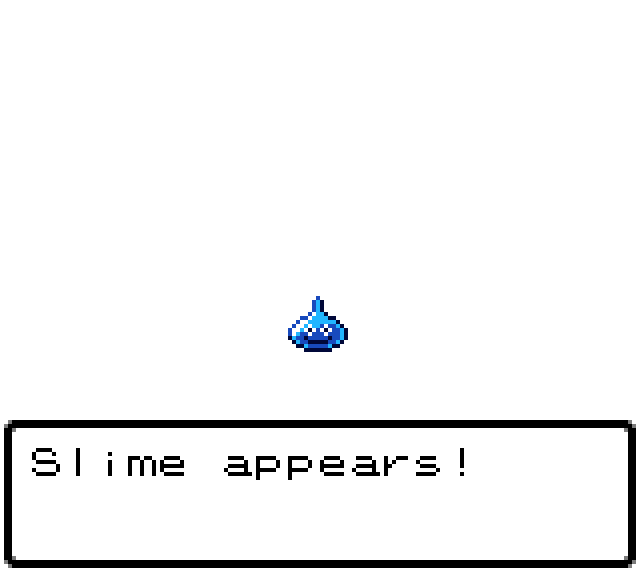
The Game Boy Color port (2000) then copied the Super Famicom monster table almost byte for byte: 158 of 159 shared monsters are identical. The one deliberate change is Baramos, who went from 2,500 to 3,000 HP.
3The boss ladder
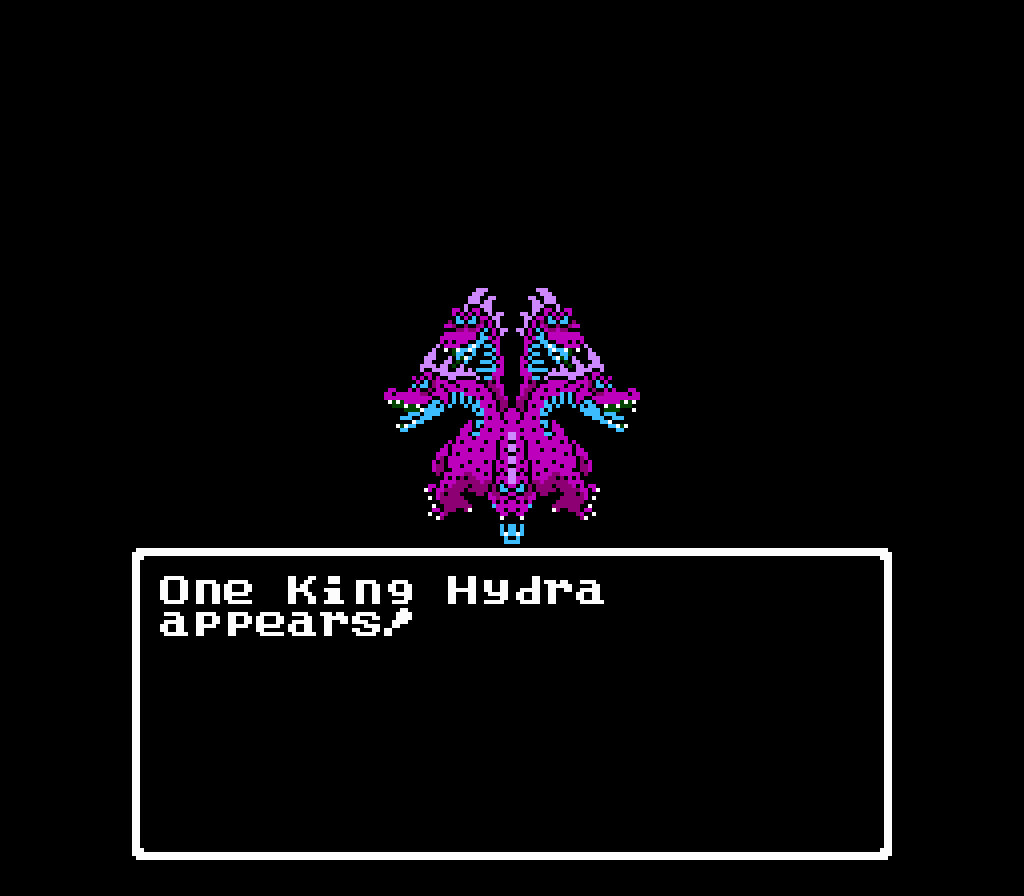
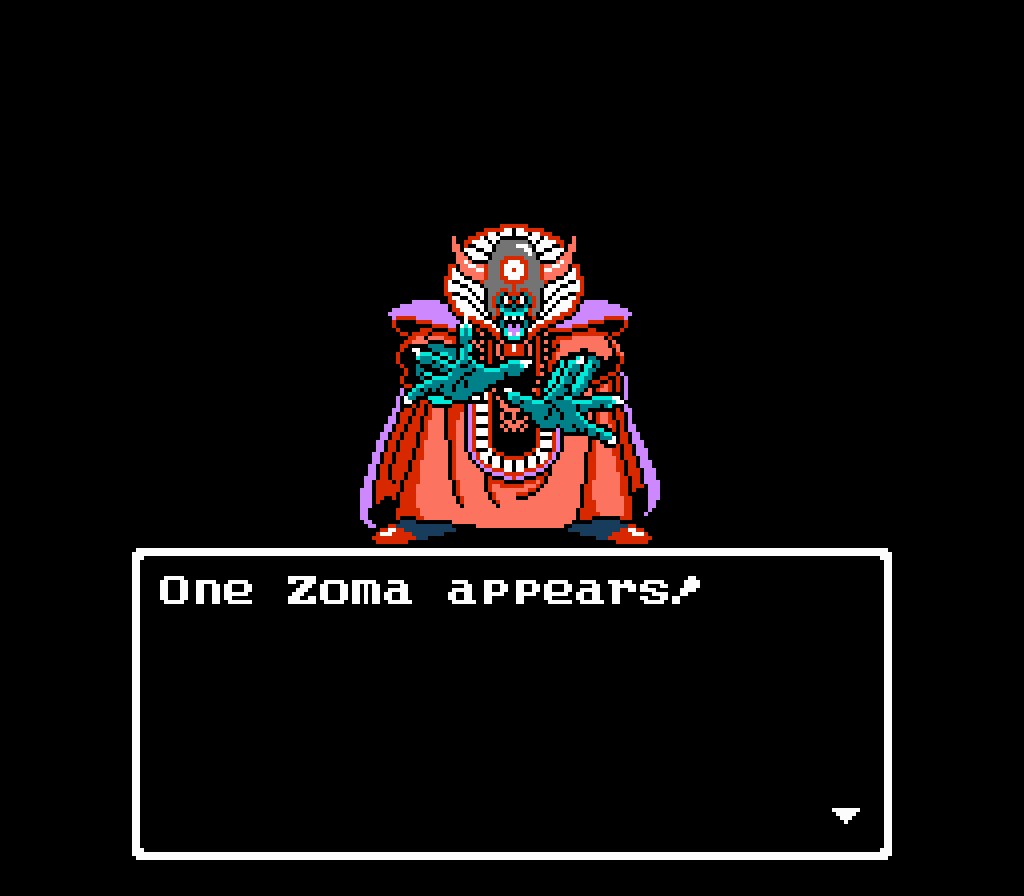
The 8-bit cartridge couldn't store more than 1,023 HP for any monster, and Zoma sits exactly on that line — in both of his forms. The 1996 remake lifted the ceiling and multiplied every boss: Zoma to 4,700, the Orochi from 300 to 1,800, the Boss Troll from 320 to 1,500. HD-2D went further again — except for one: the Bones of Baramos went down, from 3,000 to 2,960.
Zoma went from 1,023 HP to 4,700 to 8,300; every boss rode the same staircase
Boss HP by release, log scale (NES/SFC/GBC read from cartridges; HD-2D from a reference site)
- Zoma
- Baramos
- Orochi
- King Hydra
- Other bosses
4HD-2D: one multiplier, or hand-tuned?
If a remake simply scales a game, every monster moves by about the same factor and the points line up on one diagonal. Comparing 112 regular monsters between the 8-bit cartridge and HD-2D, HP is the closest to a single multiplier (×1.6, with 58% of monsters within 15% of it). Defense was scaled hardest and least evenly (median ×3.5, only 33% near it) — and gold was cut in half (×0.5).
HD-2D multiplied Defense by a median ×3.5 — 33% of monsters sit near that line
Defense: 8-bit cartridge (x) vs HD-2D (y), log-log. Middle 80% of multipliers: ×1.94 to ×5.614.
- Monster
- Median multiplier
5Where the 8-bit version hit its ceilings
The NES table stores HP, attack, defense and gold in 10 bits (max 1,023), EXP in 16 bits (max 65,535), and level in 6 bits (max 63). These monsters sit exactly on a limit — and some of those limits survived into the remakes as design, not necessity: the metal slimes' 1,023 defense and Baramos's 65,535 EXP were copied unchanged to the Super Famicom and Game Boy Color.
| Monster | Stat | 8-bit (limit) | SFC | GBC | HD-2D |
|---|---|---|---|---|---|
| Metal Slime | Defense | 1,023 | 1,023 | 1,023 | 1,536 |
| Dancing Jewel | Gold | 1,023 | 1,023 | 1,023 | 404 |
| Metal Babble | Defense | 1,023 | 1,023 | 1,023 | 1,536 |
| Gold Basher | Gold | 1,023 | 1,023 | 1,023 | — |
| Baramos | EXP | 65,535 | 65,535 | 65,535 | 102,400 |
| Zoma | HP | 1,023 | 4,500 | 4,500 | — |
| Zoma | Agility | 255 | 255 | 255 | — |
| Zoma Weakened | HP | 1,023 | 4,700 | 4,700 | 8,300 |
The ceiling even changes how Zoma spawns. Most monsters start a fight with a random 75–100% of their HP: the game subtracts r × (maxHP ÷ 4 + 1) ÷ 256, computed in 8 bits. At 1,020 HP or more that "+1" wraps the byte to zero — so Zoma, at 1,023, is the only monster that always starts at full health. In the TAS, all 23 monster loads followed this formula exactly.
Also at the 6-bit level cap of 63: Orochi, Red Slime, Baramos Bomus, Baramos Gonus, Baramos, Zoma, Zoma Weakened, Ortega, Kandar, Kandar II, Kandar Henchman. Report #8, Cartridge Constraints, digs into these limits.
6The reference sites are mixing versions
Our research database, built from a well-known fan wiki, labels one set of numbers as the original Famicom/NES values. Checked against the cartridge, 91 of them are wrong across 56 monsters — and 48 of those 91 are exactly the 1996 remake's number. The "original" column has quietly absorbed the remake, mostly in gold and EXP — the very stats the remake changed. That's why every number on this page comes from a cartridge or is labeled as reference data.
91 "original" wiki values disagree with the cartridge; 48 of them are the remake's number
Wiki values labeled Famicom/NES that differ from the ROM, by stat
- Mismatches
Ledger Explorer
Every monster, every release. Numbers read from a cartridge are marked ROM; numbers from a reference site are marked REF; a release we have no source for says so instead of guessing.
Slime
GBC: Slime · Japanese: スライム · Today: Slime
| Release | HP | MP | Attack | Defense | Agility | EXP | Gold | Level | Source |
|---|---|---|---|---|---|---|---|---|---|
| Famicom (1988) | 8 | 0 | 9 | 5 | 4 | 4 | 2 | 1 | ROM |
| NES (1992) | 8 | 0 | 9 | 5 | 4 | 4 | 2 | 1 | ROM |
| Super Famicom (1996) | 8 | 0 | 9 | 5 | 4 | 4 | 2 | 1 | ROM |
| Game Boy Color (2000) | 8 | 0 | 9 | 5 | 4 | 4 | 2 | 1 | ROM |
| Wii (2011) | 8 | — | — | — | — | 4 | 2 | — | REF |
| Mobile (2014) | 8 | — | — | — | — | 4 | 2 | — | REF |
| 3DS / PS4 / Switch (2017–19) | No stat source for these releases | — | |||||||
| HD-2D (2024) | 8 | 0 | 9 | 5 | 4 | 4 | 2 | — | REF |
Slime: HP in every release that records it
Orange = read from the cartridge · blue = reference site
- Cartridge
- Reference site
How we know
Read from the cartridges
Dragon Warrior III (USA).zip— SHA-119ab26df82c3…, monster table at0x32e3Dragon Quest III - Soshite Densetsu e... (Japan).zip— SHA-10518f091ecf5…, monster table at0x3308Dragon Quest III - Soshite Densetsu e... (Japan) (Rev 1).zip— SHA-1ab614c7184f5…, monster table at0x3308Dragon Warrior III (USA).gbc— SHA-1581a12695ae4…, monster table at0x42addDragon Quest III - Soshite Densetsu e... (Japan).gbc— SHA-11f30968a5ebd…, monster table at0x42a99Dragon Quest III - Soshite Densetsu e... (Japan).zip— SHA-1b711341e4b10…, monster table at0x20000
Every table is read directly from our own dumps, checked against a known hash first, and never modified. The Famicom, NES, Super Famicom and Game Boy Color numbers on this page all come from those reads; only derived stats are published. Emulator runs are observe-only: they replay a published TAS (NES) or our own scripted button presses from power-on (Super Famicom, Game Boy Color) and read — never write — the game's memory.
Reference data (labeled)
- Wii (2011) and mobile (2014): HP, EXP and gold from Cour89's tables, via our research database.
- HD-2D (2024): Dragon Quest Wiki, via our research database. We have no HD-2D cartridge, so there are no HD-2D screenshots.
- 3DS, PS4 and Switch (2017–2019): no stat source; the ledger says so rather than borrowing another version's numbers.
Matching monsters across versions
The Super Famicom and Game Boy Color tables share one record order; the NES order matches it except for the remake's inserted monsters (a second Orochi fight, the bonus dungeon, debug entries, and the ten Game Boy Color exclusives). Links to the later reference data use our database's monster concepts; a few low-confidence links are marked in the explorer and left out of the HD-2D comparison.
Table formats: the NES layout from zeromus/DragonWarrior3 (commit b35d5fd) and its disassembly; the Game Boy Color layout located by us in the ROM; the Super Famicom layout from Data Crystal and Shingo Endo's dq_analyzer notes, confirmed against the dump.